Our Story
Where Curious Kids Become Confident Creators Through Coding, Creativity, and Artificial Intelligence
Chapter 01
It Started With a Question
Every parent knows the feeling. You're making dinner, or driving to school, or just sitting on the couch, and out of nowhere comes a question you weren't quite ready for.
Most of us smile, give a half-answer, and move on with the day. But at Coding Tutor JUNIOR, that's exactly the moment we stopped and paid attention. Because a child who asks how something works isn't just curious — they're standing at the doorway of becoming a creator. And we didn't want that doorway to stay closed.
That's really where our story begins. Not in a boardroom, not with a business plan, but with a simple, honest observation: kids today are growing up surrounded by technology, yet most of them only ever experience it from the outside. They play the games. They swipe the screens. They watch the videos. Very few of them ever get to peek behind the curtain and ask, “Wait — how do I build one of these myself?”
We wanted to change that. And so, Coding Tutor JUNIOR was born — not as just anothercoding class, but as a place where a child's curiosity is taken seriously, nurtured patiently, and turned into something real.
Chapter 02
The Problem We Couldn't Ignore
Something we noticed again and again while talking to parents, teachers, and school leaders.
The world children are growing up in looks nothing like the world we grew up in.
Artificial Intelligence
Writes emails, assists decisions, and shapes how we work and learn every day.
Automation
Runs factories, workflows, and services that keep the modern world moving.
Cloud Platforms
Power hospitals, banks, classrooms, and the tools children use every day.
New Careers
Roles that didn't exist five years ago — and some today may not exist when today's eight-year-olds enter the workforce.
“If the future is going to run on code, shouldn't every child get the chance to understand it — not just use it?”
Chapter 03
Building Something Different
We didn't want to create another coding class that hands kids a worksheet, asks them to copy syntax, and calls it a day. We'd all seen those, and honestly, they rarely stick. Children don't fall in love with coding because they memorized a “for loop.” They fall in love with it the moment they build something of their own — a game, a story, a chatbot, a website — and realize, with a spark in their eyes, “I made this.”
So we brought together educators who understand how children think and learn, alongside software professionals and AI practitioners who understand where technology is heading. Together, we built a curriculum from the ground up — one that respects a child's developmental stage, never talks down to them, and never overwhelms them either.
The result is a learning journey with three stages, each one meeting a child exactly where they are:
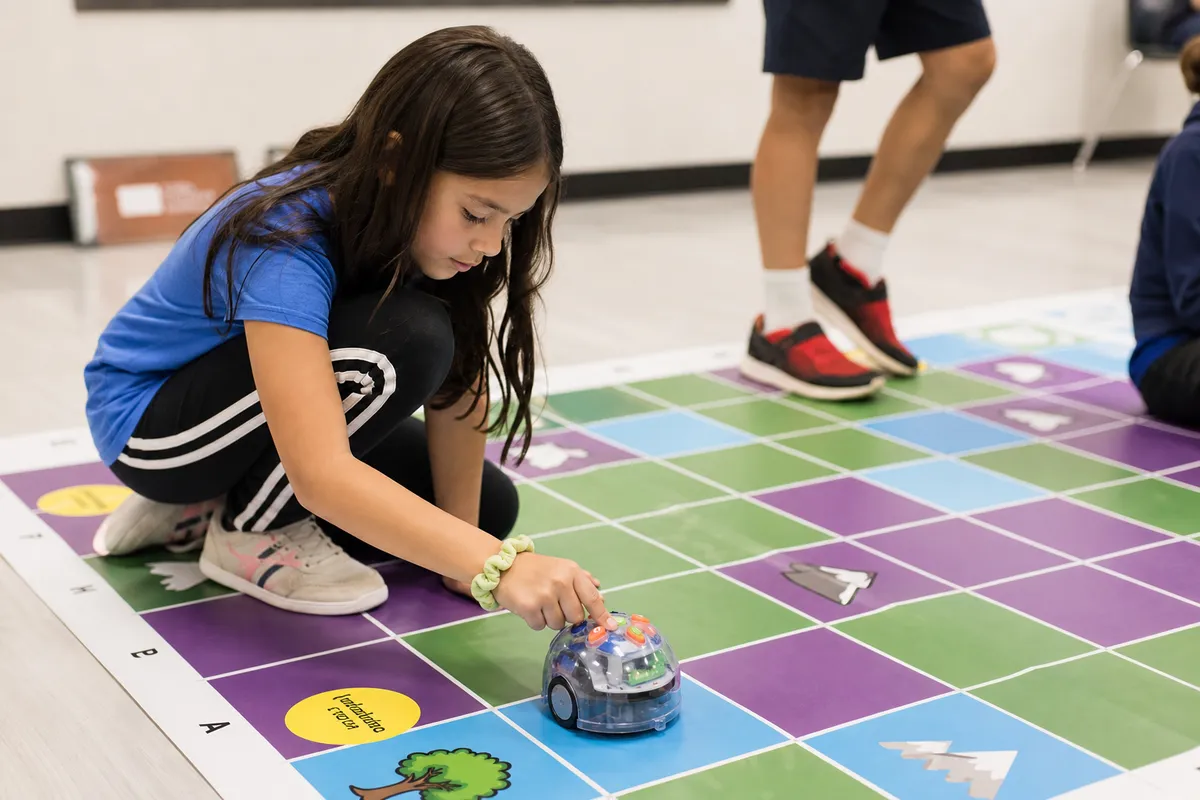
Hands-on, age-appropriate, and built for real creation — not worksheets.
Where coding feels like storytelling, animation, and play. Students learn Scratch foundations — sprites, events, games, and creative computing — and earn the Code Explorer Certificate.
Where students master Scratch at a faster pace, then bridge into real typed Python via Trinket — calculators, text games, and a first original Python project as Code Builders.
Where teenagers move through Scratch as a warm-up, then spend most of the 6 months in Python — loops, data structures, functions, Turtle graphics, and an independent application as Code Creators.
No child is handed a curriculum built for someone else's age or pace. Each step is designed to build on the one before it, so confidence grows right alongside skill.
Chapter 04
Our Mission
We help students in Grades 3–10 build the confidence, curiosity, and technical skill to become creators of technology — not just consumers of it.
We do this through hands-on projects instead of passive lessons, through mentors who genuinely care instead of instructors who simply lecture, and through a learning path that grows with each child instead of asking every child to fit the same mold.
Our mission isn't only about teaching Python or Java or AI concepts, although your child will absolutely learn those. It's about what happens underneath the surface — the moment a child debugs their own code for the first time and feels that quiet thrill of solving it themselves. The moment they present their project to the class and realize their voice matters. The moment they stop being afraid of a blank screen and start seeing it as a canvas.
That's the mission that gets us out of bed every morning: helping a child go from “I don't know how this works” to “I built this myself.”
Chapter 05
Our Vision
Our vision reaches a little further out, toward the world these children will eventually grow into.
A generation of children who grow up not just using technology, but shaping it.
We imagine a future where Artificial Intelligence, automation, robotics, and digital tools touch nearly every profession — medicine, agriculture, design, business, environmental science, all of it. In that future, we don't want children to simply adapt to technology as it happens to them. We want them to be the ones shaping it.
We envision a world where the child who once asked “how does this work?” grows up to be the person who builds the next tool, solves the next problem, or leads the next big idea — with the confidence to know they're capable of it, because they started building that confidence at eight, or eleven, or fourteen years old, right here.
We know that's an ambitious thing to aim for. But we also know that every big vision starts small — usually with one curious child, one first project, one “aha” moment. We're comfortable starting there, one student at a time.
Chapter 06
Our Learning Philosophy
If our mission is what we do and our vision is why we do it, our learning philosophy is how we do it.
“Don't just teach children to use technology — teach them to create it.”
That single sentence shapes everything about how a Coding Tutor JUNIOR class actually runs.
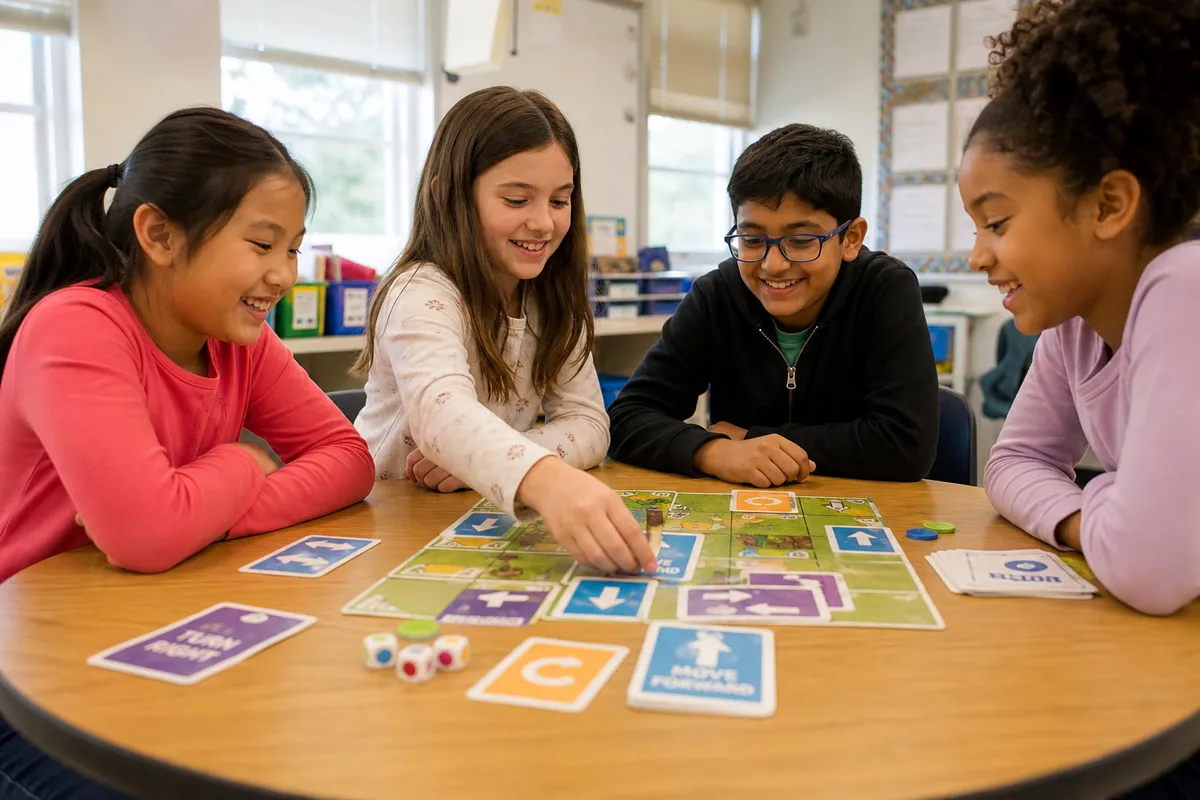
We believe children learn best by doing, not by memorizing — through play, collaboration, and hands-on creation.
Instead of long lectures about syntax, our sessions follow a rhythm of Learn, Practice, Build, Present, and Grow — kids absorb a concept, try it out hands-on, apply it to a real project, show it off to their peers, and get thoughtful feedback that helps them improve.
Kids absorb a concept through interactive lessons and guided discussions.
They try it out hands-on with exercises, puzzles, and guided challenges.
They apply what they learn to a real project — a game, website, or AI tool.
They show it off to their peers and celebrate what they created.
Thoughtful feedback helps them improve and progress with confidence.
Every single module ends with something tangible: a game, an animation, a website, a small AI tool — something they can point to and say, “I made that.”
We also believe coding is a vehicle, not the destination. Underneath every project, we're quietly building life skills that matter far beyond a computer screen:
- Logical thinking
- Patience with problems that don't solve themselves right away
- The confidence to ask questions out loud
- The teamwork it takes to build something with others
- The courage to present an idea in front of a room
Whether your child eventually becomes a software engineer, a doctor, a designer, or an entrepreneur, these are the skills that quietly carry them through.
Chapter 07
Why Mentors Matter So Much to Us
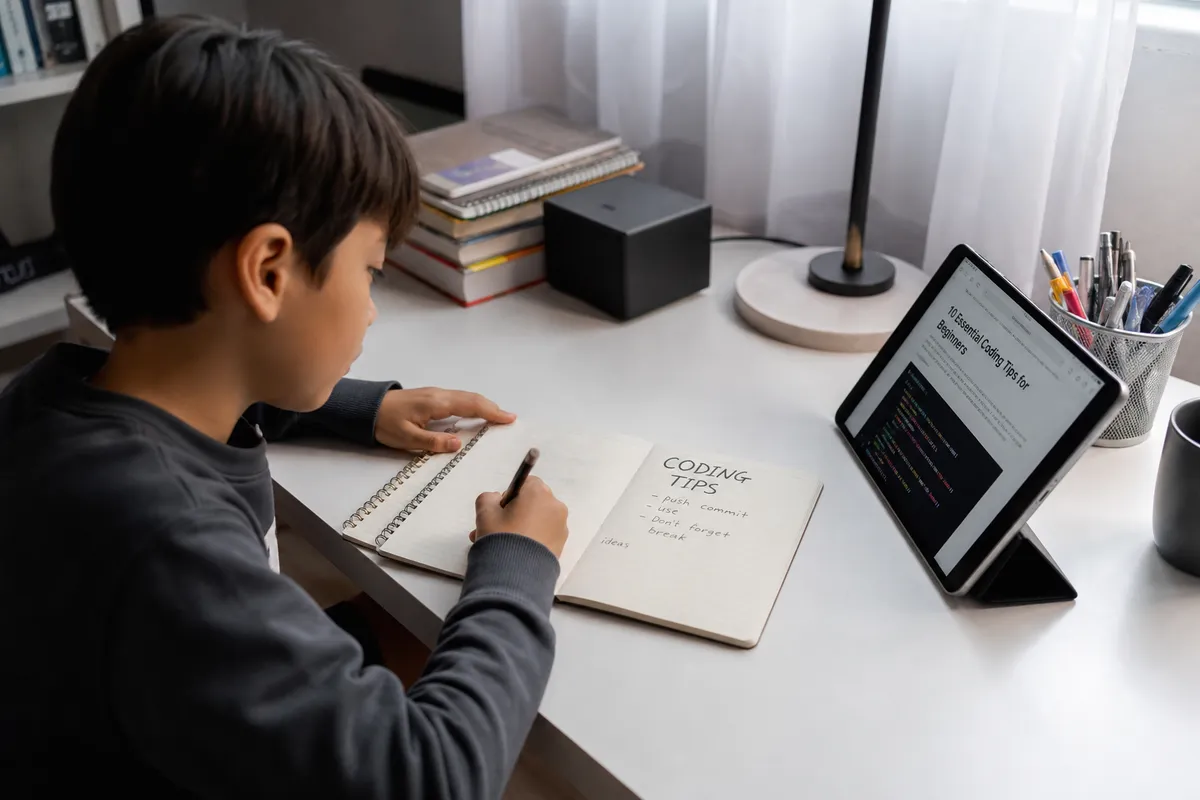
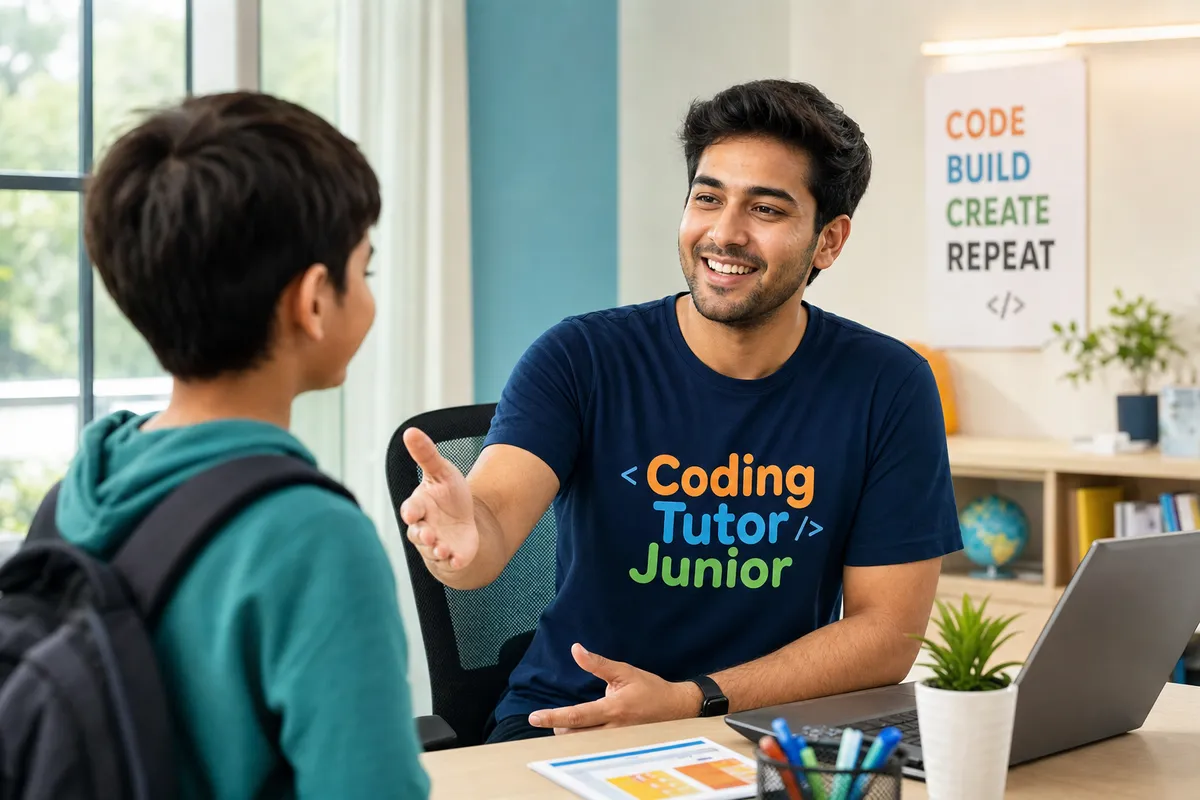
None of this works without the right people guiding it. Our mentors aren't just technically skilled — though they certainly are — they're chosen because they know how to sit with a frustrated ten-year-old staring at a broken piece of code and help them find the answer themselves, rather than just handing it over.
They celebrate the small wins as much as the big ones. A first successful line of code gets the same encouragement as a finished capstone project, because we know that confidence is built one small success at a time.
Chapter 08 — The Story Is Still Being Written
Here's the honest truth: our story isn't finished.
Every family that joins Coding Tutor JUNIOR, every school that partners with us, every student who builds their very first project — they all become part of this story too.
We started with one question a curious child asked. Since then, that question has multiplied into thousands of projects, ideas, and small breakthroughs happening in classrooms and living rooms alike. And we intend to keep writing this story for a long time to come, growing and updating our curriculum as fast as technology itself changes, so that the children in our programs today are ready for whatever the world looks like tomorrow.
If your child has ever asked a question that made you pause — how does that work, can I build one, what if I tried this — we'd love for them to bring that question to us. Chances are, we'll help them build the answer themselves.
Ready to begin?
Every great innovation still starts the exact same way it did for us — with a question, and the curiosity to go find the answer.